
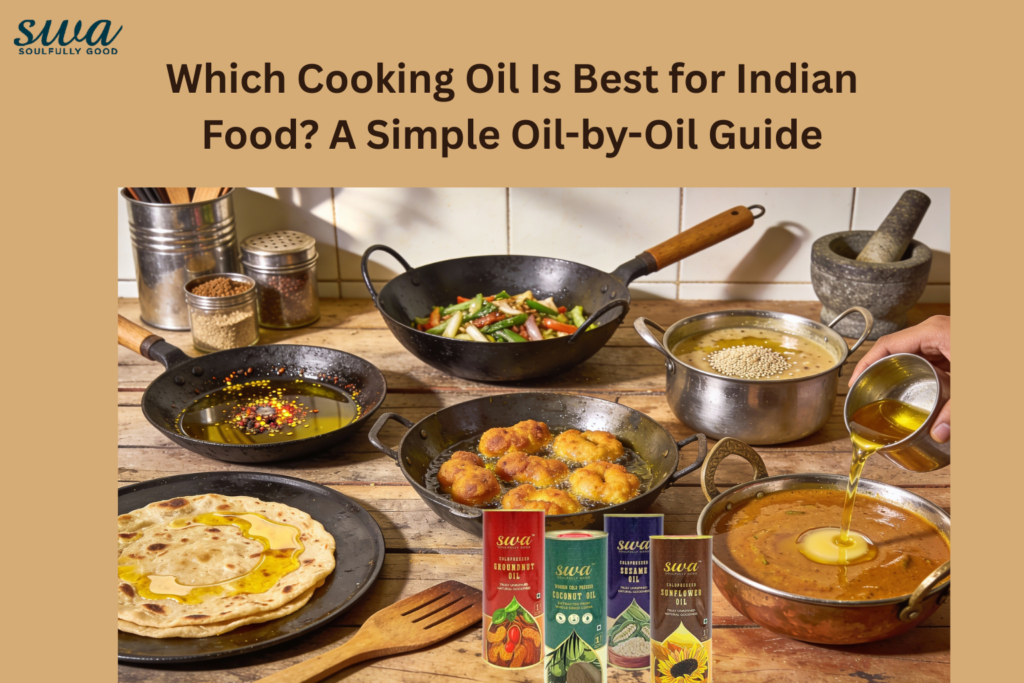
Indian food is incredibly diverse. The way oil is used in a South Indian tempering is very different from how it is used in North Indian frying or coastal cooking. Yet, many kitchens rely on a single oil for everything, often without considering whether it truly suits the dish being prepared.
Choosing the right cooking oil is not about trends or labels. It is about understanding how different oils behave with heat, how they interact with spices, and how they fit into everyday Indian cooking habits. This simple oil-by-oil guide explains which oils work best for different Indian foods and why traditional choices continue to make sense.
Why One Oil Does Not Suit All Indian Cooking
Indian cooking involves multiple techniques:
- Tadka at high heat
- Deep frying
- Slow simmering
- Stir-frying
- Roasting and sautéing
Each technique demands a different oil behaviour. Some oils handle high heat better, while others shine in low to medium heat cooking. Some enhance spice aromas, while others stay neutral.
Traditionally, Indian kitchens used different oils depending on region, climate, and cuisine. This diversity was intentional, not accidental.
Groundnut Oil: The Everyday Indian Staple
Best for: Daily cooking, frying, sautéing, gravies
Common dishes: Sabzis, dals, puris, pakoras, curries
Groundnut oil has been a mainstay in Indian kitchens for generations. Its balanced fatty acid profile makes it stable for medium to high heat cooking, which suits most everyday Indian dishes.
Cold-pressed groundnut oil has a mild nutty aroma that complements spices without overpowering them. It works well for:
- Tadka with cumin, mustard seeds, and garlic
- Deep frying snacks
- Cooking onion-tomato gravies
This oil adapts easily across cuisines, which is why many households rely on it as their primary cooking oil.
Sesame Oil: Ideal for Traditional and High-Heat Cooking
Best for: High-heat cooking, traditional dishes
Common dishes: South Indian cooking, pickles, stir-fries
Sesame oil has excellent heat stability, making it suitable for high-temperature cooking. In Indian cuisine, it is especially valued in South Indian preparations where oil plays a major role in flavour development.
Cold-pressed sesame oil enhances:
- Tempering with mustard seeds and curry leaves
- Rasam and sambar bases
- Vegetable stir-fries
It has a distinct aroma that pairs well with spices and fermented foods. Because of its stability, sesame oil is also used for occasional deep frying.
Coconut Oil: Naturally Heat-Stable and Region-Specific
Best for: High heat cooking, roasting, frying
Common dishes: Kerala cuisine, coastal dishes, vegetable curries
Coconut oil behaves very differently from seed oils. Its natural fat composition makes it highly stable under heat, which is why it has been traditionally used for frying and roasting in coastal regions.
Cold-pressed coconut oil works well for:
- Frying fish and vegetables
- Cooking coconut-based gravies
- Roasting spices
It solidifies in cooler temperatures, which is completely natural and does not affect quality. Once warmed, it returns to liquid form without any loss of integrity.
Sunflower Oil: Light and Suitable for Medium-Heat Cooking
Best for: Light cooking, stir-frying, shallow frying
Common dishes: Vegetable sautés, light curries
Cold-pressed sunflower oil is lighter in taste and aroma compared to other oils. It works best when cooking does not involve prolonged high heat.
This oil is suitable for:
- Quick vegetable stir-fries
- Light sautéing
- Shallow frying
Because it has a milder flavour, it allows the natural taste of vegetables to come through. However, it should not be overheated repeatedly, as it performs best at controlled temperatures.
Why Cold-Pressed Oils Work Well for Indian Food
Indian cooking rarely involves heating oil to extreme temperatures for long periods without ingredients being added. Spices, onions, and vegetables are introduced early, which helps regulate oil temperature naturally.
Cold-pressed oils retain:
- Natural antioxidants
- Fatty acid balance
- Seed-specific flavour
These qualities allow them to perform reliably in Indian cooking when used mindfully.
Matching Oils to Indian Cooking Styles
Rather than asking which oil is “best,” it helps to ask which oil suits a particular dish.
For example:
- Use groundnut oil for everyday North Indian cooking
- Choose sesame oil for South Indian dishes and tempering
- Use coconut oil for coastal and regional recipes
- Use sunflower oil for lighter, quick cooking
This approach mirrors how Indian households cooked traditionally, long before refined oils became common.
How Oil Choice Affects Taste and Aroma
Oil is not just a cooking medium; it is a flavour carrier. Cold-pressed oils interact with spices differently compared to refined oils.
When spices bloom in oil during tempering, cold-pressed oils release deeper aromas because they retain their natural compounds. This is why dishes cooked in traditionally extracted oils often taste richer, even with the same ingredients.
Storage and Usage Matter
Regardless of the oil used, proper storage is essential. Cold-pressed oils should be kept away from direct sunlight and heat. Reusing oil multiple times, especially after deep frying, should be avoided.
Using fresh oil and choosing the right oil for the right dish ensures better taste and safer cooking.
Choosing Oils for a Balanced Kitchen
Many Indian kitchens benefit from keeping more than one oil. This does not complicate cooking; it improves it.
A balanced kitchen might include:
- Groundnut oil for daily use
- Sesame or coconut oil for traditional dishes
- Sunflower oil for lighter preparations
This allows flexibility without compromising on quality or flavour.
A Note on Traditional Extraction and Quality
The way oil is extracted matters as much as the seed itself. Oils extracted slowly, without chemical solvents or excessive heat, retain their natural structure and perform better in cooking.
At SWA Oils, cold-pressed groundnut oil, sesame oil, coconut oil, and sunflower oil follow this traditional approach, focusing on minimal processing so the oil behaves naturally in Indian kitchens.
Final Thoughts
There is no single “best” oil for all Indian food. The strength of Indian cooking lies in its diversity, and oil choice should reflect that diversity.
Understanding how different oils behave, matching them to cooking methods, and using them thoughtfully brings out the best in everyday meals. Cold-pressed oils, when chosen wisely, support traditional cooking techniques while preserving flavour and integrity.
The right oil does not change the recipe. It simply lets the recipe be what it is meant to be.