
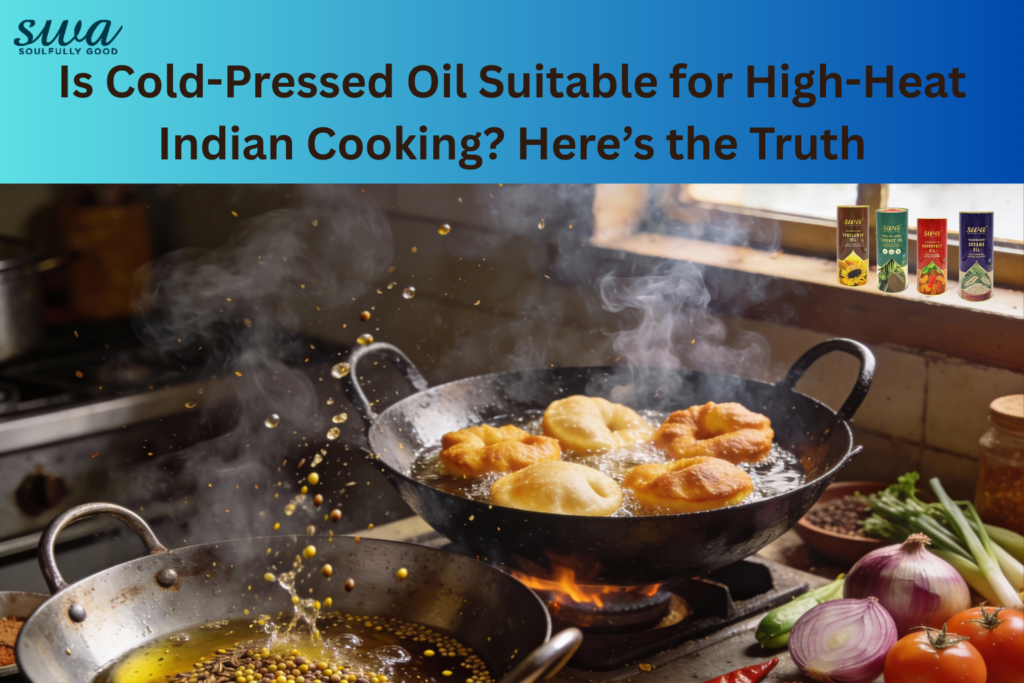
Indian cooking is known for its bold flavours, rich tempering, and techniques that often involve high heat. From deep frying puris to tadka for dals and slow-cooked curries, oil plays a central role in everyday meals. This is where an important question often arises in Indian households: Can cold-pressed oils really handle high-heat cooking, or are they only meant for salads and light sautéing?
There is a lot of confusion around this topic, mostly because cold-pressed oils are frequently associated with raw food diets or wellness trends rather than traditional Indian kitchens. The truth, however, is far more practical and rooted in how oils were used long before industrial refining became common.
This article breaks down the facts, clears common misconceptions, and explains how cold-pressed oils fit naturally into high-heat Indian cooking when used correctly.
Understanding What Cold-Pressed Oil Really Is
Cold-pressed oil is extracted using a mechanical process that involves pressing oilseeds at low temperatures, without chemical solvents or excessive heat. In traditional wood-pressed methods, seeds are slowly crushed, allowing the oil to be released naturally.
Because the process avoids high heat and chemical refining, the oil retains its original structure. This includes natural antioxidants, fatty acids, aroma, and flavour compounds that are usually stripped away during refining.
What is important to note is that cold-pressed does not mean fragile. It simply means the oil has not been chemically altered.
Why the “High-Heat Myth” Exists
One of the biggest myths around cold-pressed oils is that they are unsafe or unsuitable for high-temperature cooking. This misconception comes from two main sources.
First, many people confuse cold-pressed oils with extra-virgin oils meant for raw consumption, assuming all unrefined oils behave the same way. Second, refined oils are often marketed as being “heat stable” because they have very high smoke points, which creates the impression that anything less refined must break down easily.
In reality, smoke point alone does not determine whether an oil is healthy or suitable for cooking.
Smoke Point vs Oil Stability: What Matters More
Smoke point refers to the temperature at which oil starts to visibly smoke and break down. Refined oils usually have higher smoke points because impurities and natural compounds have been removed.
Cold-pressed oils tend to have moderately lower smoke points, but they make up for this with better oxidative stability. This means they resist breaking down into harmful compounds when heated gradually, especially during typical Indian cooking methods.
Indian cooking rarely involves heating oil until it smokes aggressively for extended periods. Most dishes involve heating oil, adding spices, onions, or ingredients soon after, which naturally regulates temperature.
Traditional Indian Cooking Has Always Used Unrefined Oils
For generations, Indian households used wood-pressed or stone-pressed oils without any issues. Groundnut oil, sesame oil, coconut oil, and mustard oil were staples across regions.
These oils were used for:
- Deep frying
- Tempering spices
- Long-cooked gravies
- Festive cooking
The shift to refined oils is relatively recent, driven by industrial food processing and large-scale production, not by traditional culinary wisdom.
Cold-pressed oils align more closely with how cooking oils were originally intended to be used.
How Cold-Pressed Oils Perform at High Heat
When used correctly, cold-pressed oils perform well for most Indian cooking needs.
The key lies in controlled heating, not overheating. Gradually warming the oil and avoiding prolonged smoking preserves its structure and nutrients.
Here’s how common cold-pressed oils behave in high-heat Indian cooking:
- Groundnut oil handles sautéing, frying, and tadka well due to its balanced fatty acid profile.
- Sesame oil is naturally stable and widely used for deep frying and traditional South Indian dishes.
- Coconut oil performs exceptionally well at high heat because of its saturated fat content, making it ideal for frying and roasting.
- Sunflower oil, when cold-pressed, works best for medium to moderately high heat applications like stir-fries and shallow frying.
Each oil has its own character, and choosing the right one for the right dish makes all the difference.
What Happens When Cold-Pressed Oil Is Overheated
Just like any oil, cold-pressed oils should not be abused. Overheating them repeatedly or letting them smoke heavily can cause nutrient loss and flavour degradation.
However, the same applies to refined oils as well. The difference is that refined oils may appear more “stable” because their natural components have already been stripped away.
With cold-pressed oils, the signs of overheating are clearer: aroma changes, smoke appears earlier, and flavour shifts. These natural cues help prevent excessive damage when cooking mindfully.
Why Cold-Pressed Oils Are Better for Indian Tempering (Tadka)
Tempering is one of the most important techniques in Indian cooking. Spices are added to hot oil to release their flavours quickly.
Cold-pressed oils enhance this process because they retain their natural aroma and flavour compounds. Instead of overpowering the spices, they complement them.
Many cooks notice that cumin, mustard seeds, curry leaves, and garlic release deeper aromas when added to traditionally extracted oils compared to neutral refined oils.
Nutritional Impact During Cooking
A common concern is whether cold-pressed oils lose their nutritional value when heated. While some nutrients are sensitive to extreme heat, cold-pressed oils still retain more beneficial compounds after cooking compared to refined oils.
This includes:
- Natural antioxidants
- Essential fatty acids
- Fat-soluble vitamins
Refined oils, on the other hand, start with very little nutritional value due to the refining process itself.
Choosing the Right Cold-Pressed Oil for High-Heat Cooking
Not all dishes require the same oil. Understanding regional and culinary compatibility helps maximise performance and flavour.
For example:
- Traditional frying and everyday cooking benefit from groundnut or coconut oil.
- South Indian dishes pair well with sesame or coconut oil.
- Light stir-frying works well with sunflower oil when not overheated.
Using cold-pressed oils according to their natural strengths ensures both safety and taste.
Storage and Reuse: An Important Factor
Proper storage plays a crucial role in how cold-pressed oils behave during cooking. Keeping oils away from light, heat, and moisture preserves their stability.
Reusing oil multiple times, especially after deep frying, is not recommended for any type of oil. Cold-pressed oils, because they are unrefined, are best used fresh and replaced sooner to maintain quality.
The Role of Quality and Processing
The suitability of cold-pressed oil for high heat depends heavily on how it is made. Oils extracted slowly, without artificial heating or chemical interference, retain their natural resilience.
Brands that focus on traditional extraction, small-batch processing, and careful filtration produce oils that perform reliably in Indian kitchens.
This approach ensures the oil behaves predictably when heated and delivers consistent results.
So, Is Cold-Pressed Oil Suitable for High-Heat Indian Cooking?
Yes, when used with awareness and intention.
Cold-pressed oils are not delicate ingredients reserved only for salads or drizzling. They are practical, versatile, and deeply connected to Indian culinary traditions.
By choosing the right oil for the right dish, heating it gradually, and avoiding excessive reuse, cold-pressed oils handle high-heat Indian cooking safely and effectively.
They offer a way to cook that respects both tradition and health, without compromising on flavour or functionality.
Final Thoughts
Indian cooking has always been about balance of heat, spices, ingredients, and techniques. Cold-pressed oils fit naturally into this balance when understood properly.
Rather than fearing heat, the focus should be on mindful cooking. When oils are chosen thoughtfully and used as intended, they become partners in creating meals that are nourishing, flavourful, and rooted in tradition.
Cold-pressed oils are not a modern compromise. They are a return to a way of cooking that has always worked.