
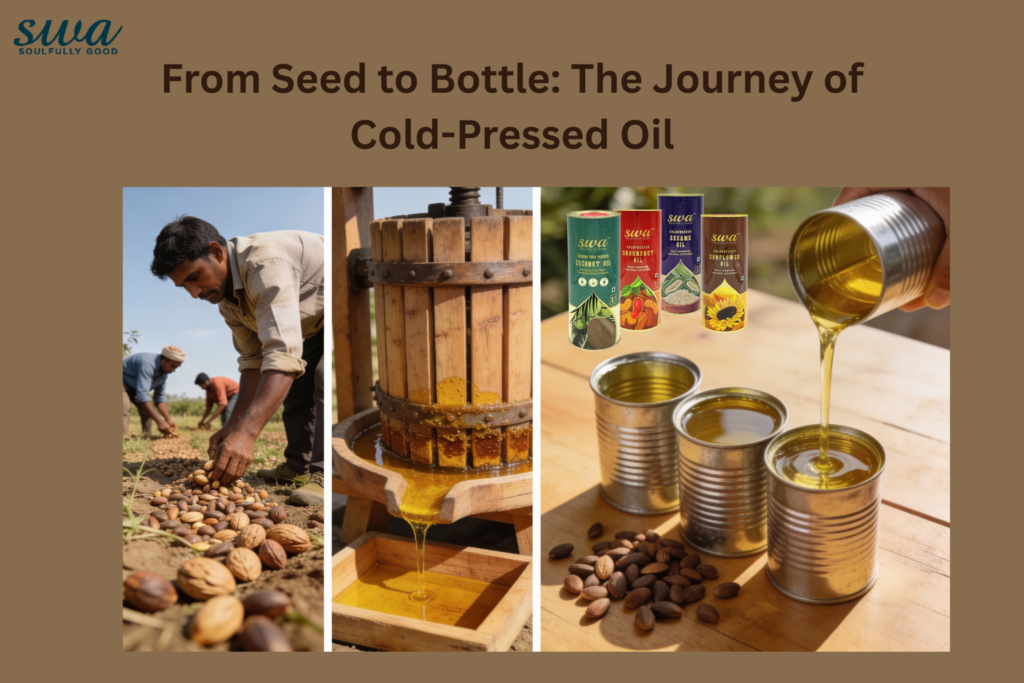
Cold-pressed oil is not just a cooking ingredient. It is the result of a careful, deliberate journey that begins with a seed and ends in a bottle meant for everyday use. Unlike industrial oils produced through aggressive processing, cold-pressed oils follow a slower path, one shaped by traditional knowledge, patience, and respect for natural ingredients.
Understanding this journey explains why cold-pressed oils look different, smell different, and behave differently in cooking. It also helps build trust in what goes into daily meals, especially when choosing oils made using traditional methods.
Step 1: Selecting the Seeds That Define the Oil
Every oil starts with the seed, and the quality of the oil can never exceed the quality of its raw material. Cold-pressed oils depend on carefully selected oilseeds such as groundnut, sesame, coconut, and sunflower.
Seeds are chosen based on freshness, maturity, and natural oil content. Seasonal harvesting plays an important role, as seeds collected at the right time produce oil with better aroma and stability. Poor-quality or aged seeds may yield more oil, but they compromise flavour and nutritional value.
This is why traditionally extracted groundnut oil, sesame oil, coconut oil, and sunflower oil retain distinct characteristics that reflect their origin rather than appearing neutral or uniform.
Step 2: Cleaning and Preparing the Seeds
Once selected, the seeds undergo careful cleaning to remove dust, stones, and natural impurities. This step ensures the oil remains pure and free from unwanted flavours.
The seeds are then dried gently to achieve the correct moisture balance. Too much moisture affects extraction, while overly dry seeds reduce oil quality. This preparation stage is critical, even though it happens quietly behind the scenes.
Well-prepared seeds lead to oils that are stable, aromatic, and suitable for regular Indian cooking.
Step 3: Cold-Pressing Through Traditional Extraction
The heart of the journey lies in the extraction process.
Cold-pressed oil is obtained by applying mechanical pressure without using chemical solvents or artificial heat. In traditional wood-pressed systems, seeds are crushed slowly using a rotating wooden pestle inside a wooden chamber.
This slow movement prevents excessive heat generation. Oil flows out naturally, carrying the seed’s original flavour, aroma, and nutrients. Unlike industrial extraction, which prioritises speed and yield, cold pressing values control and integrity.
This method is especially important for oils like sesame oil and groundnut oil, which develop richer aromas when extracted slowly.
Step 4: Natural Separation of Oil
After pressing, the oil is collected and allowed to rest. During this resting period, fine particles and seed matter settle naturally at the bottom.
This natural separation removes the need for heavy filtration. The oil clarifies itself over time while retaining beneficial compounds that are often lost during refining. Slight cloudiness or variation in colour is normal and expected.
These variations are signs of minimal intervention, not defects.
Step 5: Minimal Filtration to Preserve Character
Cold-pressed oils may undergo light filtration or remain unfiltered, depending on the approach. The goal is to remove larger particles without stripping the oil of its natural properties.
Minimal filtration helps retain:
- Natural antioxidants
- Essential fatty acids
- Seed-specific aroma and flavour
For example, coconut oil may solidify in cooler temperatures, while sunflower oil may appear lighter and more fluid. These behaviours are natural and reflect the oil’s original structure.
Step 6: Temperature Control Throughout the Process
Temperature management is one of the most important aspects of cold-pressed oil production. Excessive heat can damage nutrients and alter flavour.
Traditional extraction methods regulate temperature naturally due to their slow pace. This gentle handling ensures the oil remains nutritionally intact and stable during cooking.
Oils extracted under controlled conditions behave more predictably when heated and retain their nutritional value better than aggressively processed oils.
Step 7: Quality Checks Before Bottling
Before bottling, the oil is evaluated for aroma, clarity, and texture. These checks ensure that the oil meets quality standards without corrective treatments.
Because cold-pressed oils are minimally processed, quality control depends on careful handling rather than post-processing fixes. Any issues are addressed at the source, not masked later.
This approach ensures consistency without compromising authenticity.
Step 8: Packaging That Protects the Oil
Packaging plays a critical role in preserving oil quality. Cold-pressed oils are sensitive to light, heat, and air exposure.
They are typically stored in:
- Dark glass bottles
- Opaque containers
- Food-grade tins
This protects the oil from oxidation and helps maintain freshness. At SWA Oils, this seed-to-bottle journey continues through thoughtful packaging, ensuring that oils like cold-pressed groundnut oil, sesame oil, coconut oil, and sunflower oil reach kitchens without losing their natural character.
Step 9: Storage and Shelf Life
Cold-pressed oils generally have a shorter shelf life compared to refined oils. This is a reflection of minimal processing, not reduced quality.
Proper storage away from sunlight and heat helps maintain freshness. Seasonal changes may cause oils to thicken or change appearance, especially coconut oil, which solidifies naturally in cooler temperatures.
These changes are normal and reversible.
Step 10: Reaching the Kitchen
By the time cold-pressed oil reaches the kitchen, it has undergone a journey shaped by restraint and intention.
When used in cooking, these oils respond best to gradual heating and mindful use. Their natural aroma enhances traditional Indian dishes, and their stable structure supports everyday cooking methods.
Each bottle carries the essence of the seed, the season, and the extraction method behind it.
Why the Seed-to-Bottle Journey Matters
Understanding this journey explains why cold-pressed oils differ from refined oils in taste, behaviour, and appearance.
Refined oils are stripped, deodorised, and reconstructed for uniformity and long shelf life. Cold-pressed oils retain individuality.
This individuality reflects:
- Natural variation
- Traditional knowledge
- Respect for raw ingredients
Knowing this helps set realistic expectations and encourages informed choices.
A Return to Thoughtful Cooking
Choosing cold-pressed oil is not about trends. It is about reconnecting with slower, more intentional food practices that prioritise quality over convenience.
The journey from seed to bottle highlights the importance of patience at every stage. Each step matters, and shortcuts always leave an impact.
Cold-pressed oils do not promise perfection. They promise honesty.
Final Thought
From selecting quality seeds to gentle extraction, minimal filtration, and careful packaging, the journey of cold-pressed oil is built on restraint and responsibility.
Understanding this process brings greater appreciation for everyday ingredients and encourages mindful cooking. When oil is treated as an essential ingredient rather than a commodity, it changes how meals are prepared and enjoyed.
The journey may be slow, but it preserves what matters most—purity, flavour, and trust.